


Lakadong Is a Place, Not Just a Color: Understanding India’s Most Famous Turmeric
If you have ever searched for premium turmeric, chances are you have come across the name Lakadong Turmeric. Known for its deep golden colour, strong aroma, and naturally high curcumin content, Lakadong has earned a global reputation as one of India’s finest turmeric varieties. But with growing popularity comes a serious challenge: misrepresentation in the market.
Today, many turmeric products from across North East India are sold under the “Lakadong” name, even when they do not originate from the actual Lakadong region. This creates confusion for buyers, affects farmer livelihoods, and weakens the identity of one of India’s most respected GI-tagged spices.
So how can buyers identify authentic Lakadong turmeric?
The answer lies not in colour—but in understanding Geographical Indication (GI).
Lakadong Is a Place, Not Just a Color.
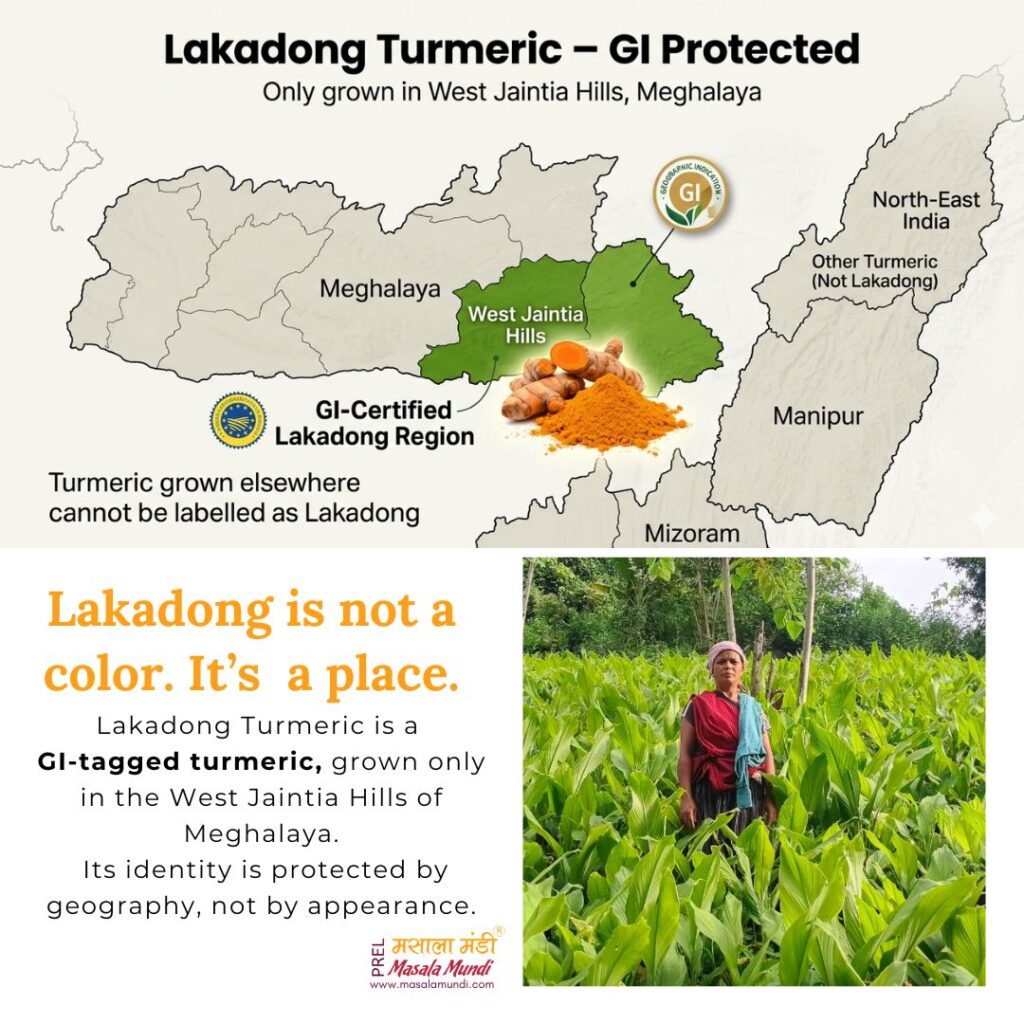
One of the biggest misconceptions in the turmeric market is that Lakadong refers to a particular colour or quality standard.
In reality:
Lakadong is a geographical origin.
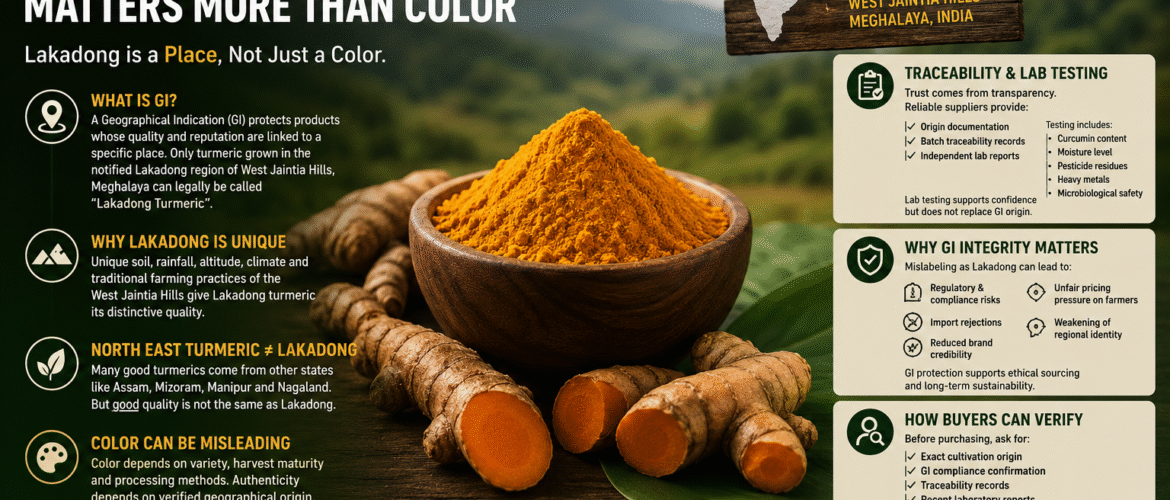
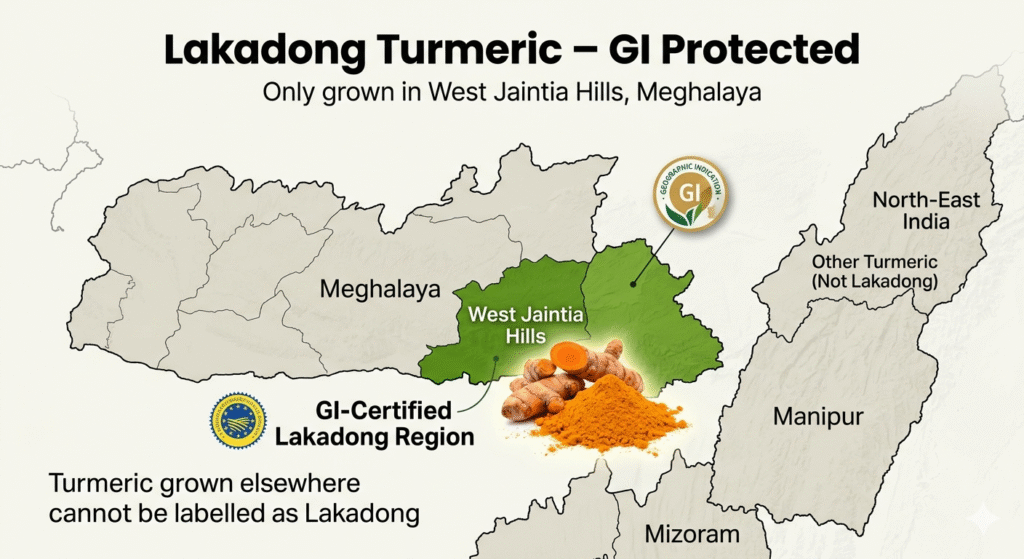
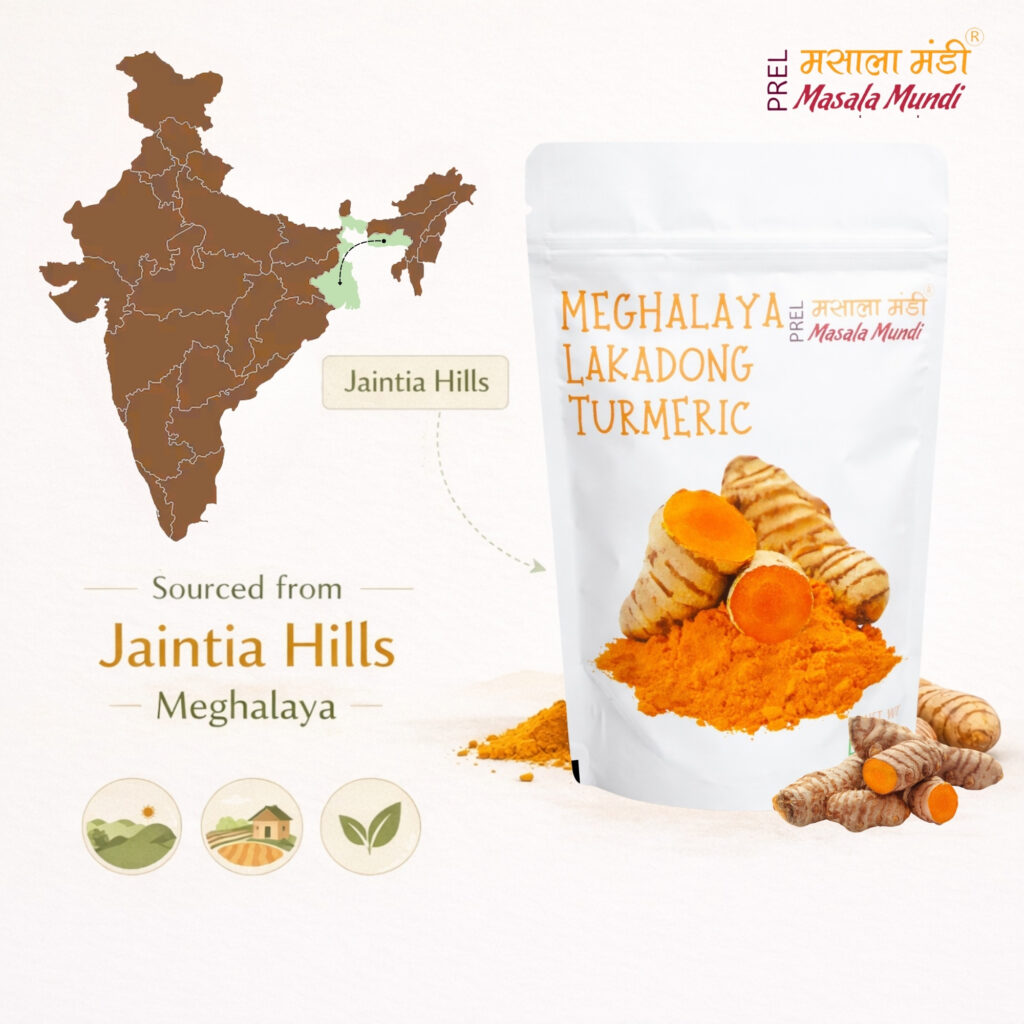
Authentic Lakadong turmeric is grown exclusively in the officially recognized Lakadong region of the West Jaintia Hills district of Meghalaya, India.
Only turmeric cultivated within this notified GI region can legally be called Lakadong Turmeric.
Any turmeric grown outside this specific area—even if it looks similar or comes from nearby North East states—does not qualify as genuine Lakadong under GI regulations.
What Is Geographical Indication (GI)?
A Geographical Indication (GI) is an official certification that protects products whose quality, reputation, or characteristics are directly linked to a specific geographical region.
Well-known global examples include:
- Darjeeling Tea
- Champagne
- Parmigiano Reggiano cheese
Similarly, Lakadong turmeric carries value because of its connection to the unique environmental conditions and farming traditions of Meghalaya’s West Jaintia Hills.
GI protection helps:
Maintain buyer trust
Preserve authenticity
Protect farmers and local communities
Prevent market misuse
Why Authentic Lakadong Turmeric Is Unique?

Lakadong turmeric is not simply “high-curcumin turmeric.” Its identity is shaped by a combination of natural and traditional factors, including:
- Unique soil composition
- High rainfall patterns
- Altitude and climate
- Traditional tribal farming methods
- Regional agricultural practices
These conditions collectively contribute to the distinct properties associated with genuine Lakadong turmeric.
- Unique soil composition
- High rainfall patterns
- Altitude and climate
- Traditional tribal farming methods
- Regional agricultural practices
These conditions collectively contribute to the distinct properties associated with genuine Lakadong turmeric.
North East Turmeric Is Excellent—But Not Always Lakadong
North East India produces several outstanding turmeric varieties across states such as:
- Assam
- Mizoram
- Manipur
- Nagaland
Many of these turmerics have:
- Strong aroma
- Attractive colour
- Good quality
However, quality alone does not make a turmeric “Lakadong.”
Even turmeric grown elsewhere within Meghalaya itself does not qualify unless it originates specifically from the notified Lakadong GI region.
Calling every North Eastern turmeric “Lakadong” dilutes GI protection and misleads buyers.
Why Colour Alone Can Be Misleading
A common belief among consumers is:
“The brighter the turmeric, the more authentic the Lakadong.”
This is not necessarily true.
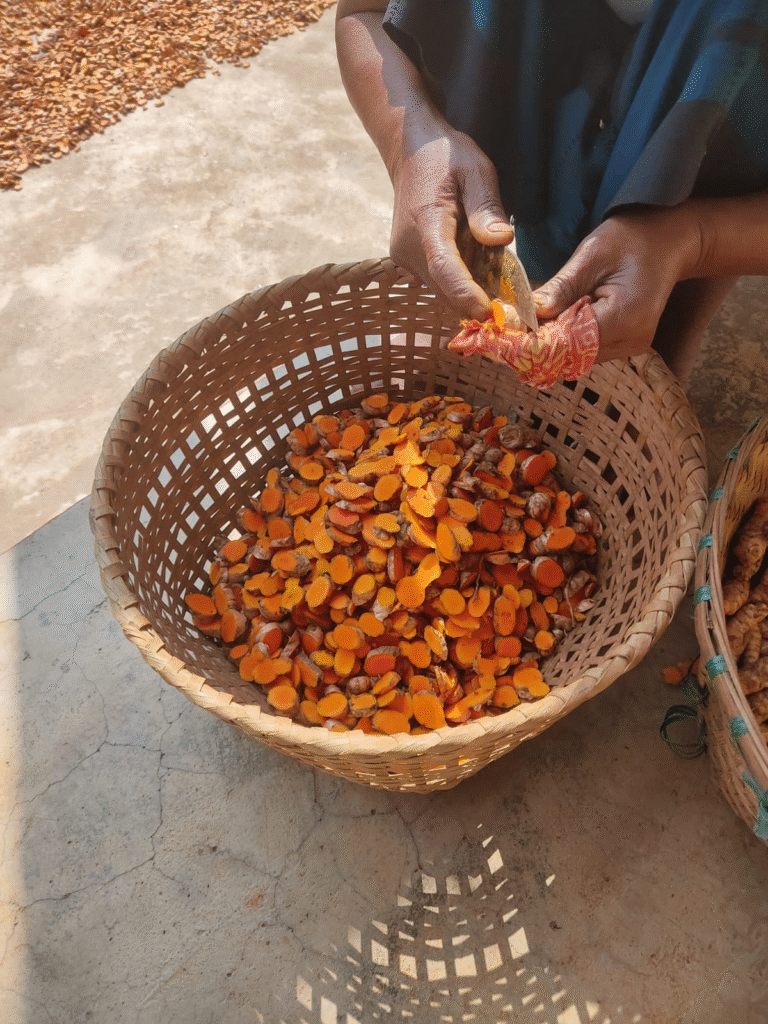
Turmeric colour can vary depending on:
- Seed variety
- Harvest maturity
- Boiling and drying techniques
- Processing methods
As a result, visual appearance alone cannot confirm authenticity.
True Lakadong authenticity depends on verified geographical origin, not simply how yellow or orange the powder appears.
The Importance of Traceability and Lab Testing
For importers, brands, exporters, and conscious buyers, transparency is essential.Reliable Lakadong turmeric suppliers should be able to provide:
✔ Origin verification
✔ Batch traceability records
✔ GI compliance documentation
✔ Independent laboratory test reports
Testing commonly includes:
- Curcumin content
- Moisture levels
- Pesticide residues
- Heavy metals
- Microbiological safety
While laboratory testing does not replace GI verification, it significantly strengthens product credibility and buyer confidence.
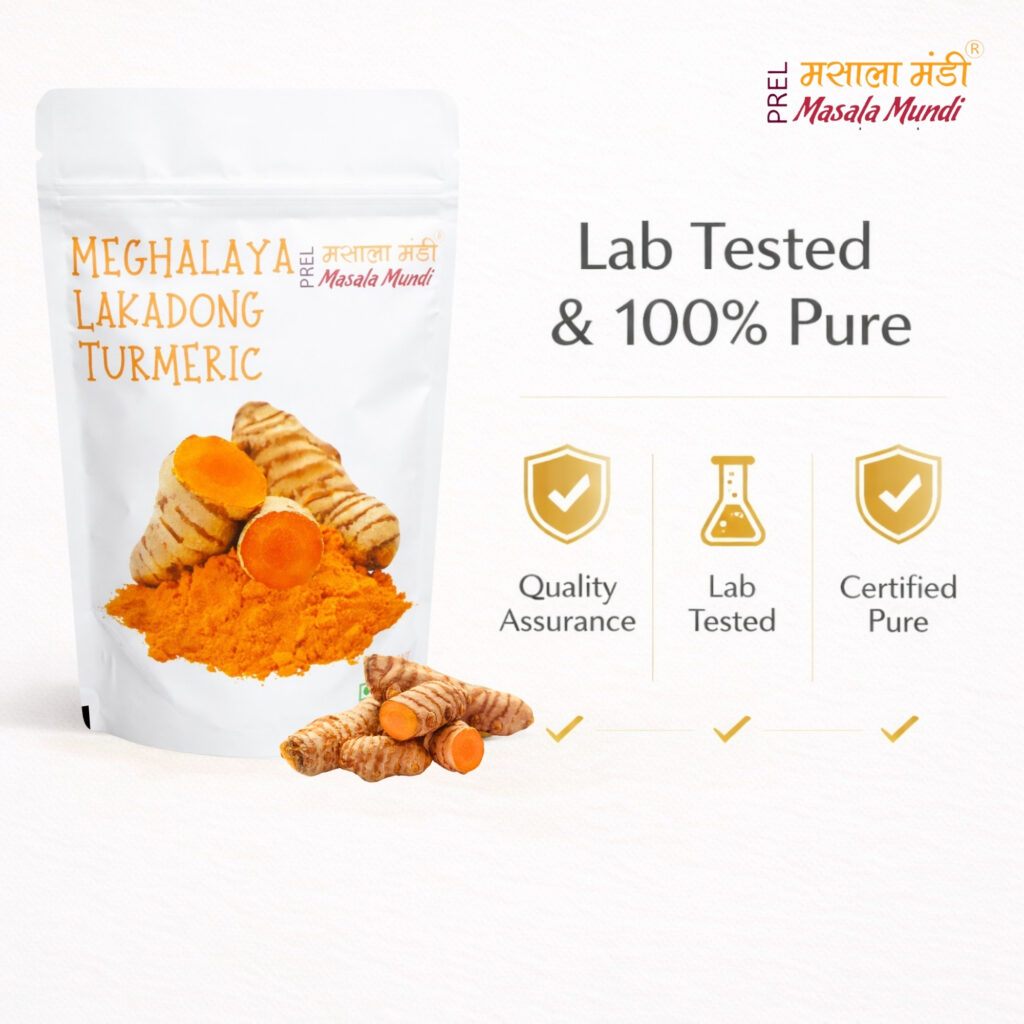
The Real Cost of Mislabeling Lakadong Turmeric
Misusing the Lakadong name affects the entire supply chain.
For Buyers and Brands
Incorrect labeling may lead to:
- Regulatory non-compliance
- Import shipment rejection
- Brand reputation damage
- Loss of consumer trust
For Farmers
Misrepresentation:
- Weakens regional identity
- Reduces fair market value
- Undermines authentic producers
Protecting GI integrity helps support ethical sourcing and long-term sustainability.
How Buyers Can Verify Authentic Lakadong Turmeric
Before sourcing Lakadong turmeric, buyers should always ask for:
Exact Origin Details
Verification that the turmeric was cultivated in the West Jaintia Hills GI region.
Traceability Records
Clear documentation connecting the batch directly to its source.
GI Compliance Statements
Proof that the supplier follows GI-related sourcing practices.
Independent Lab Reports
Recent testing reports for quality, safety, and compliance.
Transparency is one of the strongest indicators of authenticity.
Conclusion
Lakadong turmeric is far more than a bright yellow spice.
It represents:
- A protected geographical identity
- Traditional farming heritage
- Farmer livelihoods
- Regional authenticity
Protecting the Lakadong name means protecting the integrity of one of India’s most respected GI spices.
For buyers, brands, and exporters, choosing authentic GI-sourced Lakadong turmeric supports transparency, ethical sourcing, and long-term trust in the global spice market.